





How to Choose the Right Inflatable Tent Size for Your Family
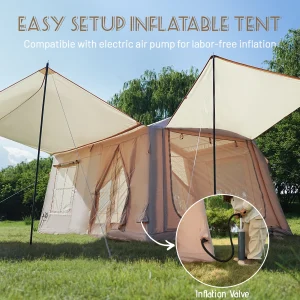
Choosing a tent for one or two people is usually fairly simple.
Choosing one for the whole family is a different story.
A tent that looks spacious in a product photo may feel very different once you add four sleeping bags, several backpacks, shoes, clothes, camping chairs, and a few children who somehow need twice as much space as everyone else.
So when choosing an inflatable tent for family camping, don’t just ask:
“How many people can sleep in it?”
A better question is:
“How much space will my family actually need?”
Start With the Number of People
The first step is obvious: count the people who will be sleeping in the tent.
But don’t stop there.
A tent advertised for four people doesn’t necessarily mean four people will be equally comfortable for a week-long camping trip.
If four people are only sleeping inside and spending most of the day outdoors, a more compact tent may work well.
If the family expects to spend mornings, evenings, or rainy afternoons inside, additional living space becomes much more important.
Sleeping Capacity Isn’t the Same as Comfort
Tent manufacturers often provide a maximum sleeping capacity.
This is useful, but it doesn’t tell you everything.
Imagine four people sleeping side by side with their bags and clothes around them.
Technically, everyone fits.
Comfortably?
That’s another question.
For family camping, it can be worth choosing a tent with some extra space beyond the basic sleeping capacity.
The additional room gives everyone a little more breathing space and makes it easier to keep personal belongings organized.
Think About How Long You’ll Be Camping
The length of your trip can change the amount of space you need.
For a one-night weekend trip, you may be happy with a relatively compact setup.
For a week-long holiday, extra room becomes much more valuable.
You’ll have more clothing, more food, more equipment, and more time spent inside the tent.
A larger inflatable family tent can make those longer trips feel much less cramped.
Do You Need Separate Bedrooms?
This is an important question for families.
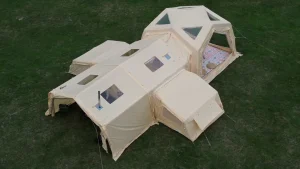
Some inflatable tents have one large sleeping area, while others provide separate sleeping compartments.
For parents camping with children, separate rooms can make a big difference.
Children can have their own sleeping space while adults have a little privacy.
Separate bedrooms can also make the tent feel more organized because sleeping areas aren’t mixed with the main living space.
Don’t Forget the Living Area
This is where many first-time buyers underestimate their space requirements.
If you only think about beds, you may choose a tent that technically fits everyone but doesn’t leave much usable space during the day.
Ask yourself what your family will do inside the tent.
Will you eat breakfast inside?
Will you sit inside when it rains?
Will the children play games?
Will you keep camping chairs and a table inside?
If the answer is yes, look for a tent with a proper living area.
Consider Your Camping Style
There isn’t one ideal inflatable tent size for every family.
If you spend most of your time hiking, cycling, swimming, or exploring, you may not need a huge tent.
If you enjoy relaxed campsite holidays where you spend long periods at the tent, more space may be worth the extra packed size.
Think about what a typical camping day looks like for your family.
Your tent should fit your lifestyle rather than simply matching a number on the packaging.
How Much Storage Space Do You Need?
Camping equipment takes up more room than most people expect.
There are backpacks, shoes, jackets, food, cooking equipment, toys, chargers, and all the small things that seem to multiply during a family trip.
A good family tent should give you somewhere to keep these items without blocking the main walkway.
If you can keep most storage along the sides or in dedicated areas, the central living space will remain much more comfortable.
What Size Inflatable Tent Is Right for Four People?
For a family of four, the right size depends heavily on how you use the tent.
A compact four-person inflatable tent can work well for families who spend most of the day outside.
A larger model with separate sleeping areas and a central living space may be better for longer trips or families who want more indoor comfort.
There isn’t a single correct measurement.
The important thing is to look beyond the sleeping capacity and consider the entire floor plan.
What About a Family of Six?
With six people, extra living space becomes much more important.
Even if everyone can technically sleep in a particular tent, six people sharing a small central area can quickly feel crowded.
A larger inflatable tent with multiple sleeping compartments and a generous living area can make family camping much easier.
It also gives you somewhere to keep gear without turning the sleeping rooms into storage areas.
Should You Buy a Bigger Tent Than You Need?
Sometimes, yes.
If you’re deciding between two similar models, the larger option can be worthwhile if you regularly take long trips or camp in changeable weather.
More space means:
- Easier movement
- More storage options
- Better separation between sleeping and living areas
- More comfortable rainy days
- More room for children
- Less clutter
But bigger isn’t always better.
A very large tent can be heavier to transport and may require more campsite space.
If you’re constantly moving between locations, a smaller tent may be more practical.
Think About the Packed Size
The tent’s size when it’s standing isn’t the only measurement that matters.
Before buying, check how large and heavy it is when packed.
Ask yourself:
Will it fit comfortably in my vehicle?
Can we carry it from the car to the campsite?
Do we have enough storage space at home?
Will the setup be manageable for the people who normally go camping?
A tent that is perfect once it’s standing may be inconvenient if it’s difficult to transport.
Consider Future Camping Trips
Families change.
Children grow.
Camping habits change too.
A tent that works perfectly today may feel different a few years from now.
If you’re buying a family inflatable tent that you expect to use for several seasons, think about how your camping needs might change.
A little extra space can sometimes make the tent useful for longer.
Don’t Judge Size From Photos Alone
Product photos can be helpful, but they don’t always give you a good sense of scale.
Before buying, look at the actual floor dimensions and interior layout.
Check the bedroom dimensions.
Look at the width of the living area.
Pay attention to the height of the tent.
If possible, compare those measurements with the space you currently use at home.
It can make the difference between imagining the space and actually understanding it.
A Simple Way to Choose Your Tent Size
Think about your family in four parts:
Sleeping: How many people need beds or sleeping mats?
Living: How much space do you need to sit comfortably?
Storage: Where will bags, shoes, clothes, and camping equipment go?
Movement: Can everyone walk around without constantly stepping over each other?
If a tent works well in all four areas, you’re probably looking at the right size.
Final Thoughts
Choosing the right inflatable tent size for your family isn’t simply about finding the largest tent you can afford.
It’s about finding the right balance between space, comfort, transportation, and the way your family actually camps.
For short trips with lots of outdoor activities, a compact tent may be enough.
For longer holidays, families with children, or campers who want a comfortable indoor living area, a larger inflatable tent can be a better choice.
Before making your decision, think beyond the number of people listed on the tent.
Consider where everyone will sleep, where the bags will go, where you’ll sit when it rains, and how much room your family needs to feel comfortable.
The right tent size is the one that gives everyone enough space without creating more work than necessary.
#InflatableTent #FamilyCamping #FamilyTent #InflatableCampingTent #CampingTent #TentSizeGuide #CampingWithKids #LargeInflatableTent #CampingTips #OutdoorCamping